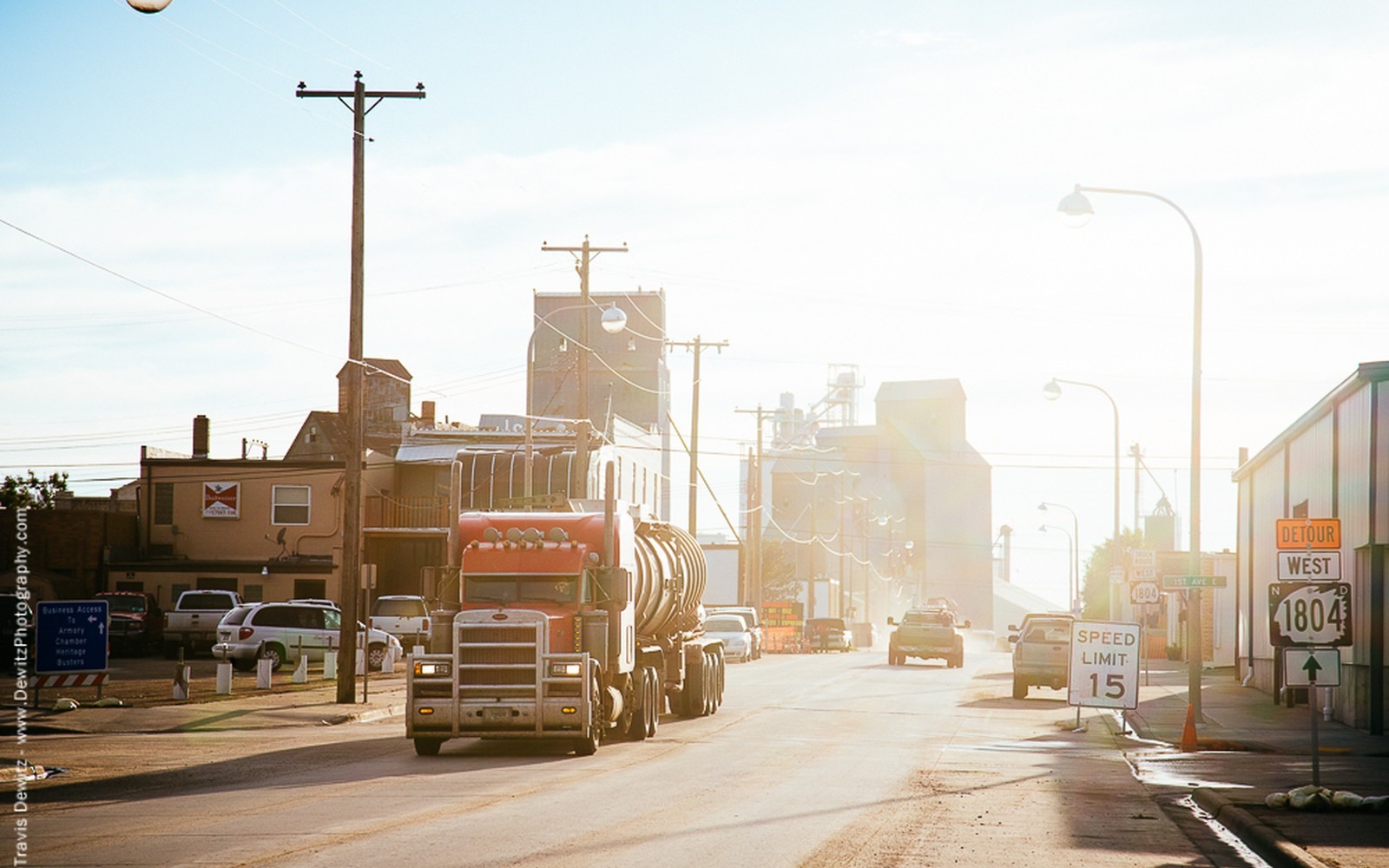
Williston is the town most people picture when they hear the word Bakken, and if your family holds mineral rights here, you've probably had more landmen and buyers reach out than owners almost anywhere else in the state.
Sitting near where the Missouri and Yellowstone rivers meet, Williston became the epicenter of the modern Bakken boom, with more wells drilled in the surrounding sections than almost any comparable area in the country. That's brought real value to a lot of long-held family mineral interests, but it's also brought a flood of mass-mailer offers that don't reflect what any individual tract is actually producing.
Dense, sustained development around Williston
Multi-well pad drilling has been the norm around Williston for over a decade, with operators stacking wellbores across the Bakken and Three Forks under the same spacing units. A tract here can easily have four, five, or more producing wells tied to it, which we check specifically rather than estimate.
Sorting a real offer from a mass-mailer guess
Because Williston gets so much attention, a lot of owners here have a stack of unsolicited offer letters that all quote different numbers with no explanation behind them. We show you the actual well data and production history behind our number, so you're comparing something real, not competing guesses.
Families who watched the town outgrow itself
Long-time Williston mineral owners have generally lived through the whole arc, quiet farmland, a flood of landmen and drilling rigs, hotel prices nobody recognized, and then a slower, steadier normal settling back in as wells matured. Through all of it, the underlying mineral interest kept its own value separate from the noise happening above ground.
We focus on that underlying value, your specific wells, your specific decline curve, rather than pricing off memories of how dramatic the boom years felt.
Begin with the local record trail
A local mineral review starts with the recording office, legal description, deed chain, reservations, lease, units, division orders, payor records, statements, and state well data.
Route local questions correctly
Probate, marital property, dormant-mineral rules, pooling, recording, transfer, regulatory filings, and payor notices can differ from one county to the next. Qualified advisers should review those questions.
Keep the local review tract-specific
Use the local context as a prompt, not a valuation shortcut. Own mineral rights in or near Williston, ND, the epicenter of the Bakken boom? Get a real, well-researched offer, not a mass-mailer guess. The review desk then reconciles the exact tract against gross and net acres, ownership fraction, producing and inactive wells, paid decimal, recent statements, lease burdens, title exceptions, and the complete written offer. That comparison keeps a familiar town or county name from standing in for the record that actually controls price and closing.
North Dakota Owner Questions
We get mailers all the time offering to buy our Williston minerals. Are any of them legitimate?
Some are, but the numbers often aren't grounded in your specific well data. Ask any buyer to show their work; we always do.
How many wells could realistically be under our Williston-area tract?
It varies, but given the density of development here, it's common to have multiple wellbores across different formations. We check your exact spacing unit before quoting.
Is now a good time to sell given how mature Williston-area wells are?
It depends on your specific well's decline stage and any nearby infill activity. We review your recent statements to give you a grounded answer rather than a generic one.
A western North Dakota family has lived through decades of change around Williston. Does that affect the sale process?
Not the process itself, only the paperwork depends on your current, documented ownership. We're glad to walk through the history with you along the way if that's helpful.