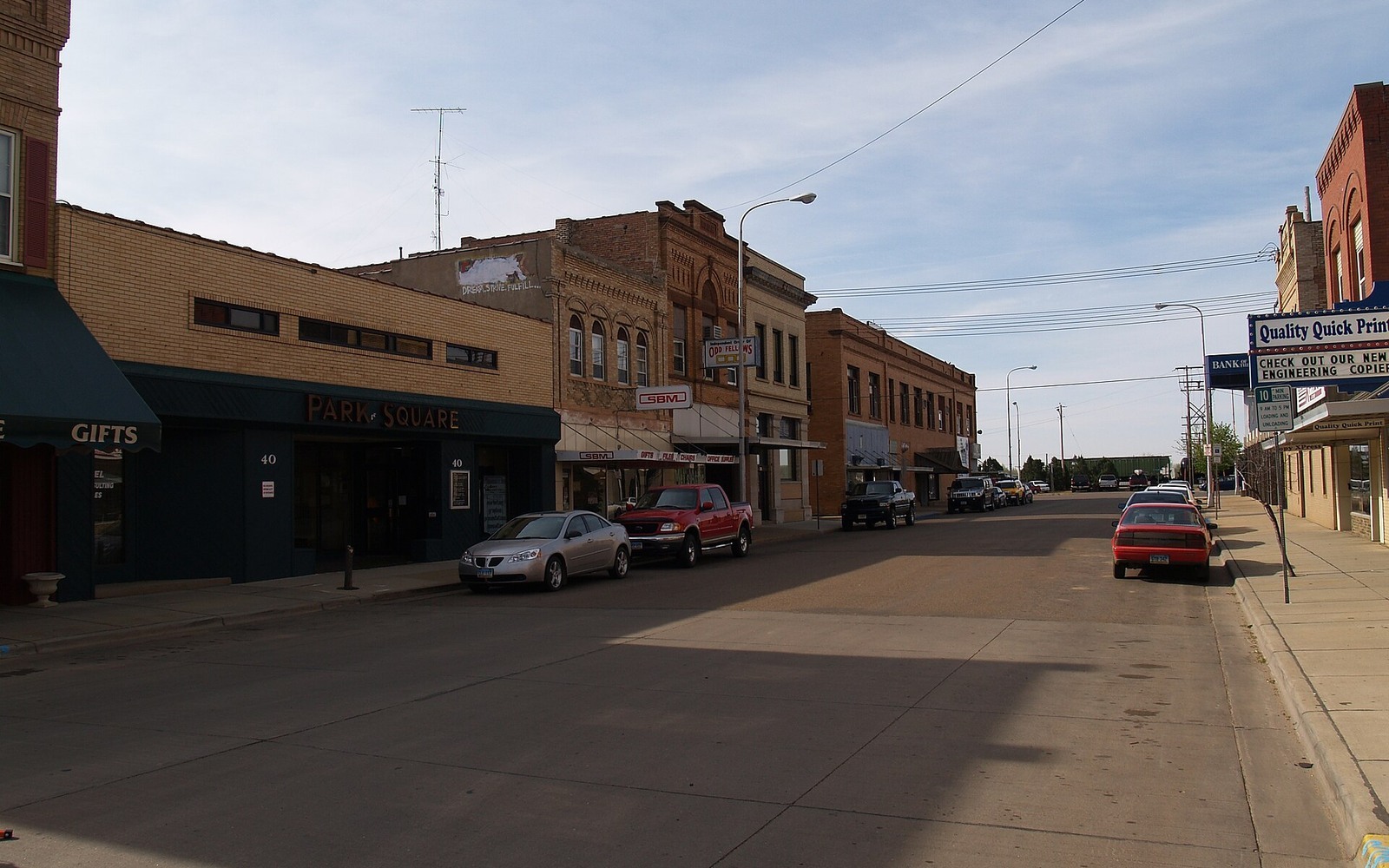
Dickinson is the largest town in this stretch of southwestern North Dakota, and it felt the Bakken boom directly, with hotels, housing, and traffic surging through the county seat during the peak drilling years.
As Stark County's regional hub, Dickinson houses the County Recorder's office, the source for deed, lease, and probate records covering tracts throughout the county. Because Dickinson itself grew so visibly during the boom years, some owners assume every nearby tract must be heavily developed, but Stark County sits on the Bakken's flank overall, so actual activity still varies significantly by specific section.
Dickinson's Boom-Years Growth
Dickinson's population and infrastructure expanded rapidly during the 2008-2014 Bakken boom as the town became a regional service and housing hub for oilfield workers, even though the county itself sits on the basin's flank rather than its core.
Why Growth in Town Doesn't Always Mean Drilling on Your Tract
A busy county seat reflects regional oilfield service activity more than it guarantees drilling on any specific rural tract, so confirming your own legal description against spacing unit records matters more than judging by how much Dickinson itself has grown.
Where to Start Your Records Search
The Stark County Recorder's office in Dickinson is the necessary starting point for confirming ownership on any tract in the county, and we handle that research for owners at no cost.
What We Check Before Any Dickinson-Area Offer
Because Dickinson's growth reflects regional oilfield services more than guaranteed drilling on any one tract, we always confirm your specific legal description against current spacing and well records before discussing value, rather than assuming activity based on how much the town itself has grown.
Begin with the local record trail
A local mineral review starts with the recording office, legal description, deed chain, reservations, lease, units, division orders, payor records, statements, and state well data.
Route local questions correctly
Probate, marital property, dormant-mineral rules, pooling, recording, transfer, regulatory filings, and payor notices can differ from one county to the next. Qualified advisers should review those questions.
Keep the local review tract-specific
Use the local context as a prompt, not a valuation shortcut. Dickinson is the Stark County seat and regional hub that boomed hard during the Bakken years. See what a family mineral interest there looks like today. The review desk then reconciles the exact tract against gross and net acres, ownership fraction, producing and inactive wells, paid decimal, recent statements, lease burdens, title exceptions, and the complete written offer. That comparison keeps a familiar town or county name from standing in for the record that actually controls price and closing.
North Dakota Owner Questions
Is Dickinson the Stark County seat?
Yes, Dickinson is the largest town in the county and houses the County Recorder's office.
Did Dickinson see a lot of Bakken boom growth?
Yes, the town grew rapidly as a regional service and housing hub during the 2008-2014 boom, even though Stark County overall sits on the basin's flank rather than its core.
Does Dickinson's growth mean your rural Stark County tract is being drilled?
Not necessarily. Town growth reflects regional oilfield services more than it guarantees activity on any specific tract, so checking your legal description directly is the reliable approach.
Where Do you research a Dickinson-area mineral interest?
The Stark County Recorder's office, located in Dickinson, holds the deed and probate records most owners need.
Does living in Dickinson make it easier to sell nearby minerals?
It can make courthouse visits more convenient, but the process itself is the same regardless of where you live, and we handle the research either way.